



A visit to the peaceful surroundings of a National Historic Landmark
Hill-Stead an ideal visit for families
By Peter Marteka
Glastonbury Life Editor
The mission of Hill-Stead Museum, a National Historic Landmark, is clear.
“Hill-Stead serves diverse audiences in Connecticut and beyond as a welcoming place for learning, reflection and enjoyment. The museum develops, preserves, documents, displays and interprets its exceptional Impressionist paintings, 1901 historic house and 152-acre landscape for the benefit of present and future generations.”

It’s that 152-acre landscape that draws me in, especially that pastoral view of the old farm from Route 4 – always a welcome break while usually stuck in that Route 4 traffic. But on this day, I sailed through and decided it was time to check out that pastoral view up close.
The grounds are stunning as you pull down the driveway lined by stone walls and huge trees. You pass the estate gardens just starting to emerge from their winter slumber and pull into the parking lot and trailhead for the three miles of trails waiting for you to explore.
The 152-acre estate was the work of Theodate Pope Riddle (who also designed and founded Avon Old Farms School) in the late 1800s and early 1900s. The estate’s five trails wind through former apple orchards and forests filled with cedars and swamp oaks, rise to a beautiful overlook and travel along a former carriage path.

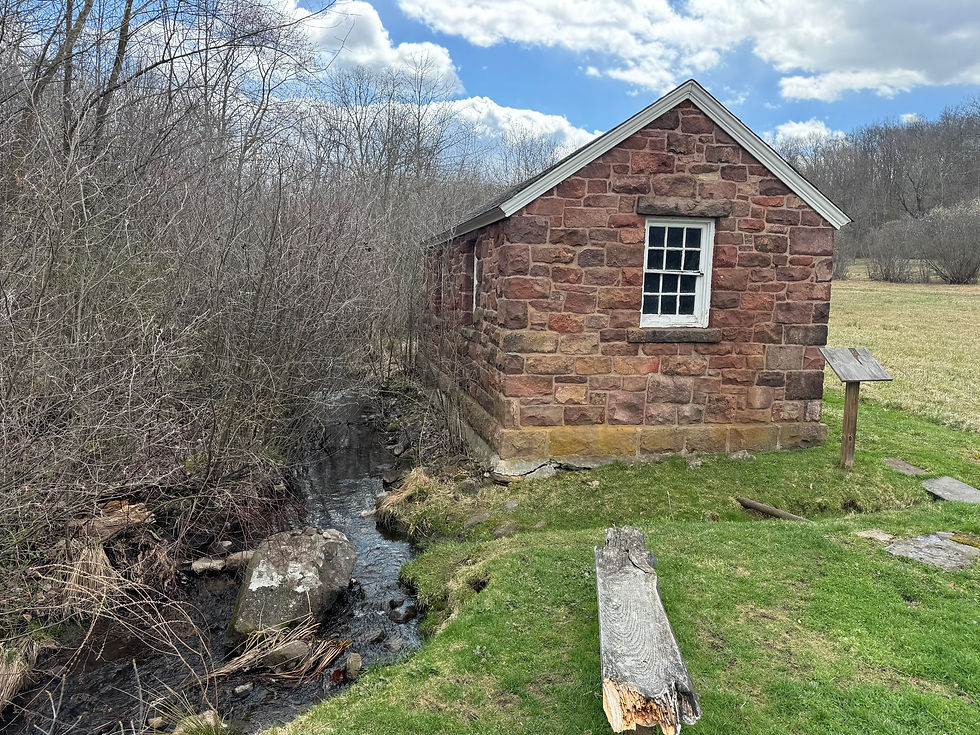
On this visit I hiked down the road past the pump house and pond to the farm. The old, weathered wood of the barns and the enclosures filled with goats and sheep from Clatter Ridge Farm are a wonderful sight. Spring is also the time for baby lambs and there were a few staying close to their mom or sleeping in the strong April sunshine.
“This working farm is an ode to founder Theodate Pope Riddle’s original intention,” a plaque on one of the barns reads. “A lover of the natural world, her Hill-Stead project started with the land and her desire from adolescence to own a fine country home and a dairy farm. She created this complex in 1898.”

The Woodland Trail takes visitors around the farm to an overlook with a panoramic view of the farm and estate as well as the surrounding Farmington River Valley and hills. Angry clouds filled the horizon adding to the wonderment of the landscape.
The Woodland Trail travels around the entire estate. A side trail takes visitors to a portion of the 51-mile Metacomet Trail – a Connecticut Forest & Park Association Blue-blazed path that runs along a trap rock mountain range from the Hanging Hills of Meriden to Massachusetts.

The trail runs through the estate’s eastern boundary. Before the leaves emerge, there are beautiful views out to the neighboring hills. Another side trail brings visitors back down to the Woodland Trail.
The swamp oak trail and cedar way trail take visitors through the lowlands of the estate. Swamp oaks rise out of the forest so it’s easy to see how the trail got its name. Another short trail loops around a pond that was dug as a water hazard for the former six-hole golf course and once provided block ice for summer refrigeration. A bridge crosses the outlet of the pond and visitors can looks back and see the reflection of the estate on the surface of the water.
In her will, Theodate wanted Hill-Stead to be preserved “for the benefit and enjoyment of the public.”

Inside the walls of the Hill-Stead Museum are priceless works of art, but walking the trails of Hill-Stead is equally priceless.
Directions: Take Exit 39, I-84 East or West. Follow Route 4 west. Turn left on Route 10 south. At first traffic light, turn left on Mountain Road. Museum entrance is a quarter-mile on the left. Visit https://hillstead.org for more information. A kiosk at the trailhead displays the map as well as upcoming programs at Hill-Stead.
Mileage and Difficulty: There are three miles of trails within Hill-Stead. The trails can be a bit wet in the spring. The Woodland Trail and the portion Metacomet Trail can be moderately difficult. All other trails are easy. The grounds are open from 8 a.m. to 5 p.m. daily.
Pets: Leashed pets are allowed but must be cleaned up after.
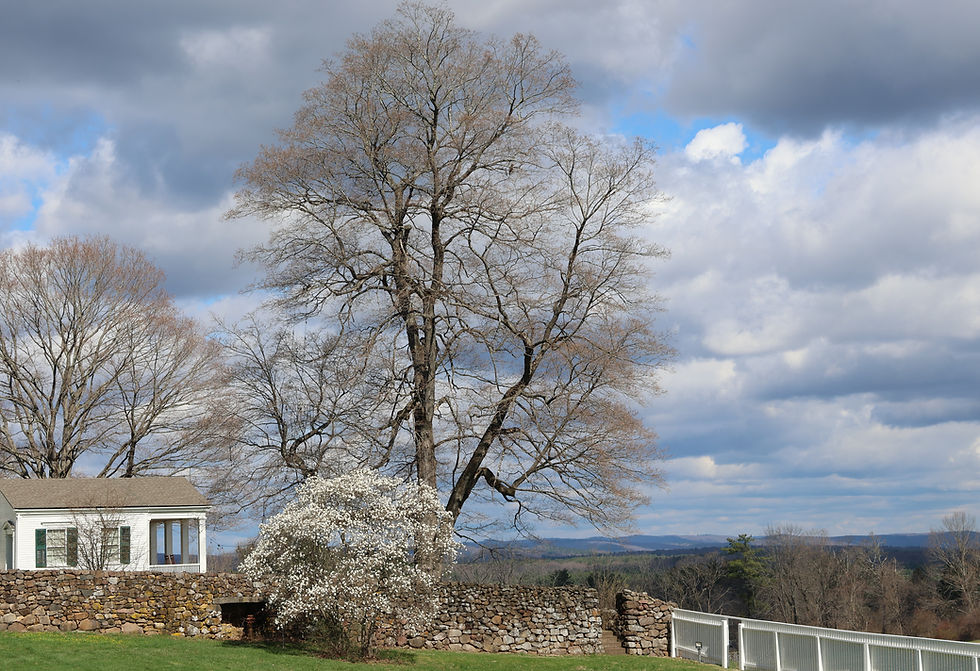
Signs of Civilization: A busy Route 4 is your constant companion along the northwestern portion of Hill-Stead, but better than stuck in its traffic. There are houses along the Metacomet Trail.
